
Glass Interposers & Through-Glass Vias (TGVs)
Using the Solstice® CopperMax™ Chamber
Enabling Next-Generation Advanced Packaging
As artificial intelligence (AI), high-performance computing (HPC), high-bandwidth memory (HBM), photonics, and heterogeneous integration continue to advance, packaging technologies must deliver higher bandwidth, improved signal integrity, and greater interconnect density.
Glass interposers are emerging as a compelling alternative to traditional substrates, offering exceptional dimensional stability, low electrical loss, and fine-line routing capability. Through-glass vias (TGVs) are the critical structures that enable electrical connections through the glass substrate, forming the foundation of next-generation package architectures.
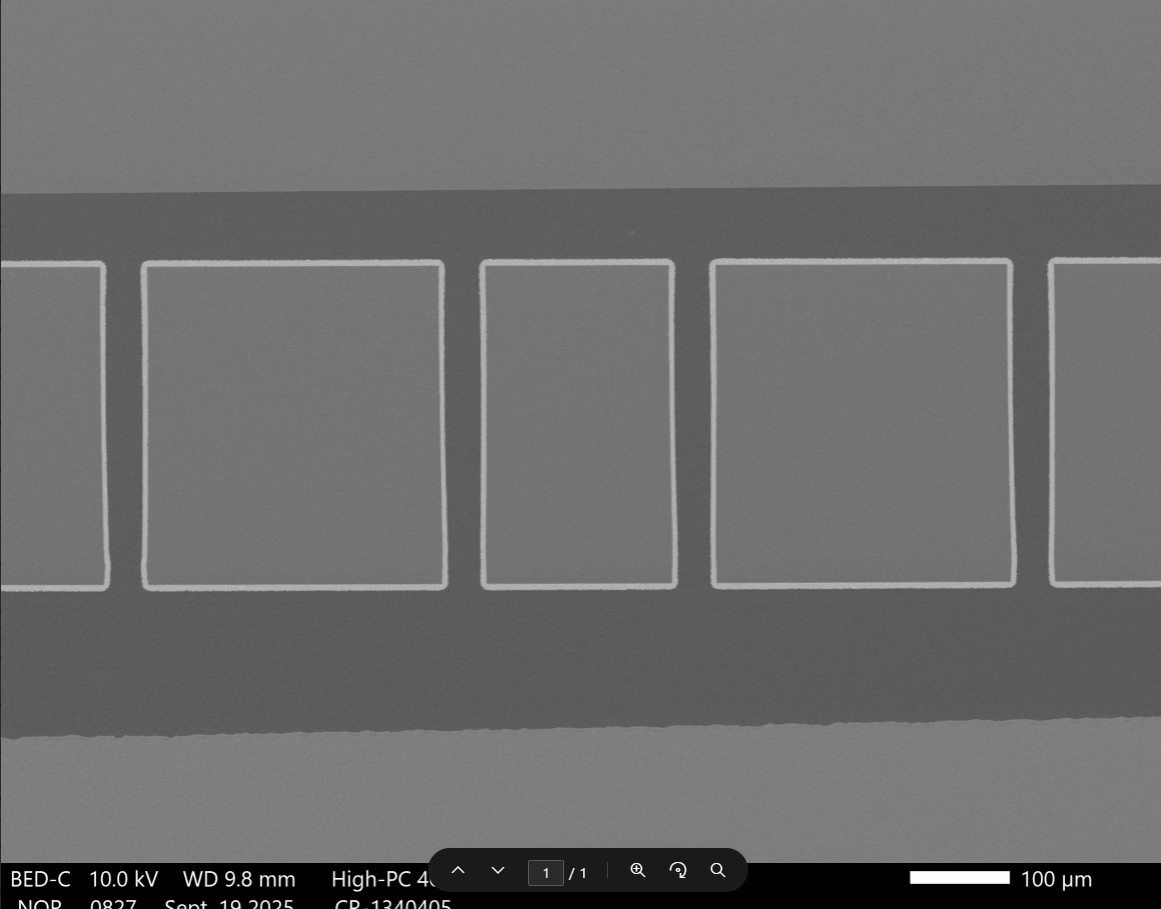
Reliable TGV Metallization
The performance of a glass interposer depends on the quality of its through-glass vias. Manufacturers must achieve:
- Uniform via metallization
- Void-free conductive filling
- Low electrical resistance
- Excellent surface planarity
- High process repeatability and yield
Successfully meeting these requirements requires advanced electroplating and wet process technologies.
CopperMax™ Electroplating
Copper metallization remains one of the most critical process steps in TGV fabrication. The Solstice® CopperMax™ chamber enables:
- Seed layer enhancement
- TGV metallization
- Void-free via filling
- Redistribution layer formation
- High-uniformity copper deposition
- Advanced process development
CopperMax™ provides the process control and uniformity needed to support both TGV research and future manufacturing environments.
Vacuum Pre-Wet
Enabling High-Aspect-Ratio TGV Structures
One of the most significant challenges in TGV processing is achieving complete wetting of deep, narrow via structures prior to metallization.
ClassOne’s vacuum pre-wet (VPW) chamber is specifically designed to improve solution penetration into high-aspect-ratio features by removing trapped air and promoting complete feature wetting before plating. For many emerging TGV architectures, VPW is a critical enabling process that helps support:
- Improved via wetting
- Reduced void formation
- More uniform metallization
- Higher process yields
When combined with CopperMax™ electroplating, VPW helps create a robust foundation for advanced TGV process development.
Integrated Wet Processing
Solstice® platforms also provide advanced cleaning and surface-preparation capabilities to support contamination control, process integration, and yield optimization throughout the manufacturing flow.
- Surface cleaning
- Contamination removal
- Pre-metallization preparation
- Post-plating processing
- Process integration and yield optimization
These capabilities help customers establish robust process flows across the full glass interposer manufacturing sequence.
Talk to Our Experts
By combining CopperMax™ electroplating, vacuum pre-wet technology, and integrated wet processing on the Solstice® platform, ClassOne provides a flexible process development environment for advancing the next generation of glass interposer and TGV manufacturing technologies.
Whether your application involves AI, photonics, RF, or heterogeneous integration, our process experts can help enable your next-generation packaging roadmap. Contact us.


